
Every spring I hear the same thing from friends: itchy eyes, a nose that runs like a tap, and a box of tissues in every room of the house. Then fall rolls around and it’s ragweed’s turn. And for some people it never ends, because dust mites don’t take vacations.
The usual answer is an antihistamine and a shrug. That can help with the symptoms, but I’d like to ask a different question: why is your immune system freaking out about pollen in the first place? Pollen isn’t dangerous. Dust isn’t dangerous. Yet the body treats them like an invading army. I think a big part of the answer lies somewhere most people would never think to look: the gut.
What is “leaky gut,” anyway?
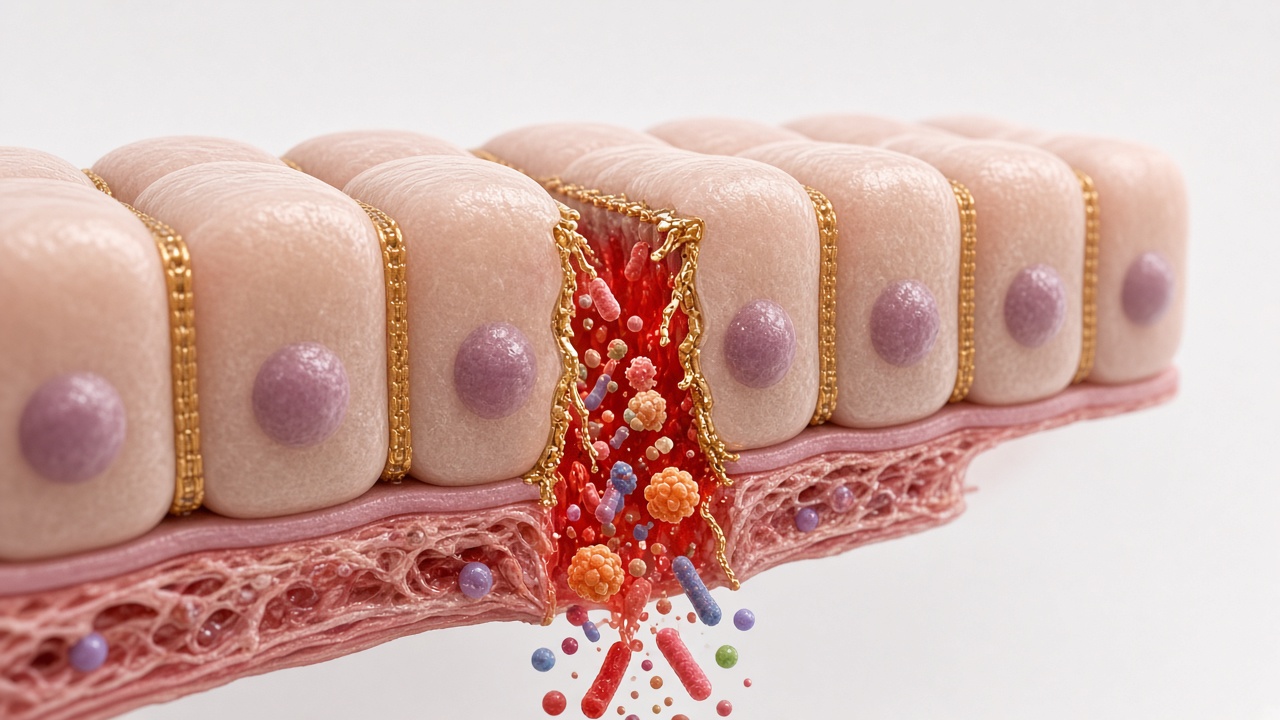
The lining of your intestines is remarkable. It’s only one cell thick, and those cells are held together by tiny seals called tight junctions. The job of that lining is to act as a discerning gatekeeper: let the nutrients through into the bloodstream, and keep everything else (bacteria, toxins, half-digested bits of food) on the outside where they belong.
“Leaky gut” is the casual name for what scientists call increased intestinal permeability. The seals loosen, the gatekeeper gets sloppy, and things slip through that shouldn’t. Research on a protein called zonulin, which helps open and close those tight junctions, suggests this gate can be pushed open by things like gluten and certain bacteria. Mainstream medicine still debates “leaky gut syndrome” as a diagnosis, but the idea that the gut barrier can become more permeable is well established.
Here’s why it matters. The gut hosts the majority of our immune cells. When stray particles keep sneaking past the barrier, meal after meal, the immune system is kept on high alert. An immune system that’s constantly on high alert starts overreacting to things it should ignore.

So how does that connect to pollen and dust mites?
An allergy is basically a case of mistaken identity. Your immune system looks at a harmless pollen grain or a speck of dust mite debris and decides it’s a threat. It builds antibodies against it, and from then on, every time you meet that allergen, it sets off a histamine alarm. Hence the sneezing, itching and watery eyes.
There’s a growing idea in allergy research, sometimes called the epithelial barrier hypothesis, that damage to our body’s barriers (primarily the gut, but also the skin and the airways) is a big reason allergies have become so common. When the barriers are weak, the immune system gets exposed to things in the wrong place at the wrong time, and it learns the wrong lessons. Think of it as your immune system getting constantly overwhelmed by the sheer volume of foreign particles it has to deal with, and lives perpetually in ‘fight or flight’ mode.
A calm, well-sealed gut means a calmer immune system overall. And a calmer immune system is far less likely to lose its mind every time the birch trees bloom.
The ancestral angle
For most of human history our ancestors ate mostly animal foods and fruit, with honey and roots seasonally. Grains, legumes, seeds, nuts and plants were emergency rations. If you think about it, it should be obvious that the vast majority of plants are inedible. Go for a walk in your neighborhood and you won’t find too many trees, bushes, shrubs, weeds or grasses that you could eat by the bowl full without making yourself violently ill. Humans have identified many edible plants, but I think a better word than edible would be tolerable. Plants make defensive chemicals to keep from being eaten, and it’s just that some plant foods are much more heavily defended than others.
Plants cannot swat away bugs, run away from predators or fight back with claws and teeth. Their defense is purely chemical. Consuming those defensive chemicals, these natural pesticides, in the short term may not be problematic, but consuming these chemicals designed to disrupt the guts of would-be predators (or in some cases poison the thyroids or immune systems of would-be predators) every day, as a staple of the diet, can be problematic for many.

What to cut: lectins (and maybe saponins)
Lectins are proteins found in lots of plant foods, especially grains and legumes(beans, peanuts, etc) and nightshades (tomatoes, potatoes, etc). Plants use them as a defense, and their purpose is to stick to and irritate the lining of the guts of would be predators and pests. The lectin in wheat (wheat germ agglutinin) gets a lot of attention, and raw kidney beans are a famous example of how unpleasant lectins can be; they’ll make you quite sick if they’re not properly cooked. Soaking, sprouting, fermenting and pressure cooking cut lectins way down, which is how traditional cultures got away with eating some of these foods, but if you’re trying to heal your gut I’d take them off the menu for a while entirely.

Saponins are the next suspect. They’re soap-like compounds (the name comes from the same root as “soap”) found in things like quinoa, soybeans, chickpeas and other legumes, as well as tomatoes and spinach. Saponins can interact with the membranes of our cells, and research indicates that in some people they make the gut lining more permeable. The number of people this effects is smaller than it is for lectins, so I’d call this one a “probably worth avoiding while you heal” rather than a long-term hard rule.

What to add: the gut-healing toolkit
#1 Bone Broth
If I could only pick one thing, it’d be this. Bone broth is rich in collagen and gelatin, which provide amino acids like glycine and proline; these are the raw building materials the body uses to repair tissue, including the lining of the gut. Glycine also seems to have a calming effect on inflammation. Have a mug every day, and use it as a base for soups and stews whenever you can. Homemade is best, but I know that can be onerous, so a good commercial or powdered broth is better than nothing. It has to be bone broth though, not just bullion or chicken stock or whatever.

#2 L-Glutamine
L-glutamine is an amino acid, and it happens to be one of the main fuel sources for the cells lining your intestines. Research indicates it helps maintain those tight junctions and supports the gut lining in recovering. It comes as a relatively inexpensive powder you can stir into juice or some other drink. Go for 10g per day and it’s ideal to take on an empty stomach, but either way is better than nothing. If you aren’t into disguising the taste with some juice, you can get capsules, you just have to take 5-10 a day, which might feel like a lot to some people.
#3 Vitamin D
Regular readers knew this was coming. Vitamin D plays an important role in keeping the gut barrier strong; research suggests it helps the body maintain the proteins that make up those tight junctions. It’s also one of the immune system’s main regulators, helping keep it from overreacting. Low vitamin D levels have been linked to allergies and asthma in a number of studies. Get sunlight when you can, supplement when you can’t (with vitamin K2 and enough magnesium), and test your levels every year. I like the vitamin D council’s recommendation of 1000 IU per 25 lbs body weight, per day. So for a 125 lbs person that’d be 5000 IU’s per day. I’d double that for the first 2 months during a leaky gut protocol.
Putting it together
For two months: cut 100% of the grains, legumes and nightshades, and build your meals around high quality meat, fish, eggs (if you tolerate them), organic dairy, fruit, honey and a daily mug of bone broth. Add glutamine and vitamin D. Then pay attention. Gut healing takes a while, so don’t expect miracles by next Tuesday, but plenty of people in the paleo and animal-based world say their allergies improved dramatically after long term adherence. If you’ve been very adherent to the protocol then after a couple of months you could cut the glutamine and vitamin D doses in half, add in peeled potatoes (most of the problematic compounds are in the skin), nightshades like tomatoes (most people aren’t overly sensitive) and oats (by some fluke have much lower defense chemicals compared to other grains).
As always, this is just me sharing what I’d do, and for legal reasons i’ll emphatically state this is not medical advice. If you have any questions, don’t hesitate to contact me.
Good luck out there, and may your tissues go unused this spring!


